Global Vipassana Pagoda

About

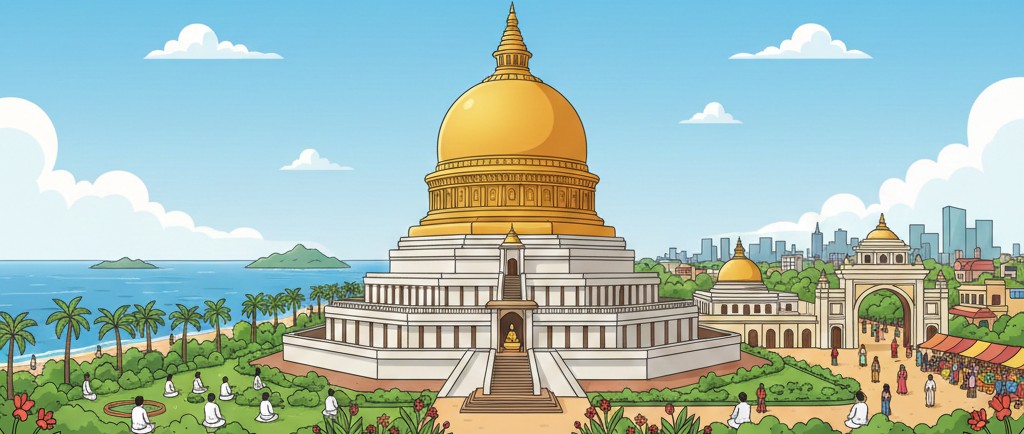
Global Vipassana Pagoda, Mumbai is not only a monumental symbol of Buddhist heritage but also a center for learning the ancient art of Vipassana meditation. Situated in peaceful Gorai Village, the pagoda provides a serene escape from the bustling city.

About & Highlights:

  • The pagoda houses the world’s largest stone dome built without supporting pillars, measuring over 85 meters in height and 100 meters in diameter.
  • Its design is inspired by Shwedagon Pagoda in Myanmar, featuring a gold-plated central dome and intricately carved stone walls.
  • The meditation hall can accommodate over 8,000 meditators at a time, offering a vast space for spiritual practice.
  • The structure incorporates ancient architectural principles, ensuring both aesthetic grandeur and structural stability.
  • Visitors can experience a calm and disciplined atmosphere, ideal for meditation and reflection.
  • The pagoda also serves as a repository of Dhamma knowledge, showcasing exhibits on the life and teachings of Gautama Buddha.

Visitor Experience:

  • Guided tours explain the history, architecture, and significance of the pagoda.
  • Photography is allowed in designated areas, letting visitors capture the stunning interior and exterior.
  • Nearby attractions include Gorai Beach, EsselWorld, and Kanheri Caves, making it a perfect day trip.
  • The pagoda maintains a strict code of discipline: modest clothing is required, and silence is encouraged in meditation areas.

Meditation Courses & Cultural Significance:

  • The center hosts 10-day Vipassana meditation courses, attracting practitioners from across India and the world.
  • It promotes inner peace, mindfulness, and spiritual growth, making it a hub for cultural exchange and learning.

Facts & Figures:

  • Height of dome: 29 stories (~86 meters)
  • Capacity: 8,000+ meditators
  • Construction period: 2000–2009
  • Materials used: Stone and gold plating

In summary, Global Vipassana Pagoda, Mumbai stands as a remarkable blend of spiritual heritage, architectural brilliance, and tranquil environment. It is an essential destination for those seeking inner peace, cultural immersion, and breathtaking architectural marvels.

Highlights

Global Vipassana Pagoda, Mumbai is a magnificent center of Buddhist heritage and meditation located in the tranquil Gorai Village. Built to honor the teachings of Gautama Buddha, it serves as a beacon of peace, spiritual learning, and cultural exchange. The pagoda’s immense stone dome, inspired by the Shwedagon Pagoda in Myanmar, is a testament to ancient architectural brilliance combined with modern engineering. Visitors can experience serene meditation sessions, explore the intricately designed interiors, and enjoy the calm surroundings, making it one of the most significant spiritual landmarks in Mumbai.

Key Highlights:

  • Houses the world’s largest stone dome built without supporting pillars
  • Gold-plated central dome with exquisite stone carvings
  • Meditation hall accommodates 8,000+ people
  • Replica of Shwedagon Pagoda, Myanmar
  • Serves as a repository of Dhamma knowledge
  • Offers guided tours explaining Buddhist philosophy and history
  • Peaceful environment ideal for meditation, reflection, and learning
  • Nearby attractions include Gorai Beach, EsselWorld, and Kanheri Caves
  • Maintains strict code of discipline for visitors

Visitor Experience:

  • Quiet, calm ambiance perfect for spiritual seekers and families
  • Photography allowed in designated areas
  • Educational insights into Buddhist history and Vipassana meditation
  • Accessible for day trips from various parts of Mumbai

Overall, Global Vipassana Pagoda is a must-visit for anyone seeking a combination of spiritual enrichment, architectural marvel, and serene natural surroundings.


History & Significance

History & Significance Global Vipassana Pagoda, Mumbai was envisioned as a tribute to S. N. Goenka, the global teacher of Vipassana meditation, and to commemorate the 2,500-year legacy of Buddha’s teachings. The foundation stone was laid in 2000, and the construction was completed in 2009, making it a modern architectural marvel with deep spiritual significance.

Historical Context:

  • Inspired by the Shwedagon Pagoda in Yangon, Myanmar, it symbolizes the transmission of Buddhist knowledge from Myanmar to India.

  • The pagoda is a testament to ancient Indian craftsmanship and stone masonry techniques, revived and modernized in its construction.

  • Every stone and brick was carefully placed by volunteers from across India, following traditional construction methods.

  • Gold plating on the central dome was imported from Myanmar, maintaining authenticity in design and cultural essence.

Significance:

  • Serves as a center for Vipassana meditation, offering courses and retreats for thousands of participants from India and abroad.

  • Acts as a repository of Dhamma teachings, preserving ancient manuscripts and inscriptions for educational purposes.

  • Symbolizes peace, harmony, and mindfulness, reflecting the core principles of Buddhism.

  • The pagoda promotes cultural unity, attracting visitors of all faiths and backgrounds, fostering spiritual awareness and tranquility.

  • Over the years, it has become a landmark of spiritual tourism in Mumbai, drawing scholars, meditators, and tourists alike.

Visitor Insights:

  • The historical and spiritual narrative adds depth to the visitor experience.

  • Guided tours provide stories of construction, significance of architectural details, and the philosophy of Vipassana.

  • The site encourages reflection and meditation amidst lush surroundings and breathtaking architecture.

In essence, Global Vipassana Pagoda, Mumbai is not just an architectural wonder but a living monument preserving the ancient wisdom of Vipassana meditation while serving as a hub for spiritual learning and global peace.

0210
Architecture & Design

Global Vipassana Pagoda, Mumbai is a stunning fusion of ancient Buddhist architectural principles and modern engineering. Its most iconic feature is the central stone dome, which is the largest in the world built without supporting pillars, spanning an impressive 85 meters in diameter. The design draws inspiration from the Shwedagon Pagoda in Myanmar, incorporating traditional Indian stone carving techniques and Burmese architectural motifs.

Key Architectural Features:

  • Dome:
    Entirely constructed of dressed stone blocks without steel reinforcements, showcasing engineering brilliance.

  • Meditation Hall:
    The hall beneath the dome can accommodate over 8,000 meditators, designed with optimal acoustics and natural lighting.

  • Entrance & Courtyard:
    Grand stone gateways and courtyards feature intricate carvings of Buddha’s life and teachings.

  • Symmetry & Geometry:
    The structure is perfectly symmetrical, adhering to Vastu Shastra principles and ancient Buddhist spatial planning.

  • Ornamentation:
    Includes stone reliefs, gold-plated embellishments, and intricately carved pillars.

  • Stupa Design:
    Houses a relic of Buddha in a central chamber, emphasizing spiritual as well as aesthetic significance.

  • Surrounding Landscape:
    Lush gardens and water features enhance the serenity of the site.

Visitor Experience:

  • Designated pathways allow visitors to walk around the stupa while appreciating the carvings and symbolic architecture.
  • The dome’s height and openness create a sense of vastness and spiritual upliftment.
  • Photography is permitted in certain areas to capture the grand scale and intricate detailing.
  • The architectural design encourages quiet reflection and meditation, complementing the spiritual ambiance.

Overall, the Global Vipassana Pagoda is a masterpiece of spiritual architecture, blending tradition with modern engineering, and offering visitors a tranquil and awe-inspiring environment.


Meditation Courses & Programs

Global Vipassana Pagoda, Mumbai serves as a world-renowned center for Vipassana meditation, offering structured programs for both beginners and advanced practitioners. These courses are based on the ancient technique of Vipassana, revived and popularized by S. N. Goenka.

Key Programs:

  • 10-Day Residential Course:
    The most prominent program, offering intensive training in Vipassana meditation. Participants learn deep self-observation, mindfulness, and mental purification techniques.

  • Shorter Courses:
    3-day, 7-day, and 14-day courses are offered for those who cannot commit to the full 10-day program.

  • Special Programs for Children & Teens:
    Courses designed to introduce meditation to younger audiences, focusing on calmness, concentration, and emotional balance.

  • Weekend Retreats:
    For working professionals or those with limited time, weekend meditation retreats provide an introduction to Vipassana.

  • Special Meditation Sessions:
    Conducted for corporates, social groups, and educational institutions, fostering awareness, stress management, and inner peace.

Course Features & Insights:

  • Residential Learning:
    Participants stay in simple, clean accommodations within the pagoda premises.

  • Daily Schedule:
    Includes 10 hours of meditation, theory sessions, and group discussions.

  • Voluntary Service (Seva):
    Students may also participate in service activities, supporting the pagoda and meditation center.

  • Silent Environment:
    All courses emphasize noble silence, encouraging introspection and focus.

  • Global Participation:
    Visitors and meditators come from across India and abroad, creating a diverse, culturally rich environment.

Visitor Experience:

  • Even non-participants can observe courses and attend guided meditation sessions in designated areas.

  • Meditation sessions enhance the overall spiritual and serene ambiance of the pagoda.

  • Participants often report improved focus, inner calm, and mental clarity, enriching their overall visit.

In essence, Global Vipassana Pagoda, Mumbai is not only an architectural marvel but also a spiritual learning hub, providing structured meditation programs that have touched thousands of lives globally.

0410
How to Reach 🚌🚇

Global Vipassana Pagoda, Gorai, Mumbai is located in the northwestern suburbs of Mumbai, near EsselWorld and Gorai Beach, making it accessible via multiple modes of transport.

By Air:

  • Chhatrapati Shivaji Maharaj International Airport (CSMIA) is the nearest airport, approximately 30 km away.

  • From the airport, you can take a taxi or cab to Gorai (Approx. ₹800–₹1,200, 1–1.5 hours depending on traffic).

By Train:

  • Borivali Railway Station is the closest major train station, about 9 km from the pagoda.

  • Local trains from Churchgate or CST to Borivali are frequent (₹10–₹40 depending on class).

  • From Borivali, take an auto-rickshaw, taxi, or bus to the pagoda (₹100–₹300).

By Road/Bus:

  • BEST buses operate from Borivali East & West towards Gorai Beach.

  • Bus numbers: 263, 263A, 269 may cover nearby routes.

  • Private taxis, cabs, and app-based services like Uber/Ola are convenient for door-to-door travel.

By Ferry:

  • From Marve Beach, Malad, you can take a ferry across the creek to Gorai.

  • Ferry timings: Usually 8:00 AM – 6:00 PM, fare approx. ₹30–₹50 per person.

  • After reaching Gorai, a short auto ride (₹50–₹100) will take you to the pagoda.

Additional Tips:

  • For public transport users, combining train + bus/ferry is budget-friendly.

  • Taxis or cabs are recommended for a comfortable and hassle-free journey.

  • Weekends and holidays may have heavy traffic; plan early morning departures for a relaxed visit.

Visiting Global Vipassana Pagoda is straightforward, with options catering to budget travelers as well as those seeking comfort.


Food Options / Food Courts Nearby

When visiting Global Vipassana Pagoda, you don’t need to worry about meals — there is a dedicated vegetarian food plaza right within the Pagoda complex. It is hygienic, affordable, and serves a variety of options for visitors.

  • On-site Food Plaza:
    Offers breakfast, lunch, and snacks. Popular dishes include idli, vada, dosa, pav bhaji, rice-dal combos, samosas, sandwiches, chaat varieties (pani-puri, bhel-puri, sev-puri), juices, and milkshakes.

  • Price Range:
    Budget-friendly, approx. ₹100–₹400 per person, depending on the meal.

  • Vegetarian Options:
    Entire food plaza is vegetarian, in line with the peaceful atmosphere of the Pagoda.

  • Visitor Notes:
    Quick service, clean dining area, drinking water, and toilets available.

Nearby Eateries in Gorai / Borivali-West (Optional for more variety):

  • Local small restaurants & cafés: Budget (~₹300–₹500), offering snacks and simple meals.

  • Mid-range multi-cuisine restaurants: Budget for two ~₹1,000–₹1,500, with North-Indian, Chinese, continental options.

Must-Try: Idli-vada, dosa, pav bhaji, veg-thali, chaat items, fresh juices. The food plaza provides a comfortable, vegetarian-friendly dining option, making it easy for visitors to enjoy meals without leaving the Pagoda premises.

0610
Best Time to Visit 🕰️

The Global Vipassana Pagoda in Gorai, Mumbai is best visited between October and March, when the weather is cool, pleasant, and ideal for exploring the pagoda and its surroundings. Here’s a quick guide for the best visiting experience:

  • 🟢 October to March:
    Cool, clear skies, perfect for meditation, photography, and garden walks.

  • 🌅 Early Mornings:
    Peaceful atmosphere with fewer visitors; ideal for reflection and mindfulness.

  • 🌦️ Monsoon Season (June–September):
    Avoid, as heavy rains can make pathways slippery and outdoor areas less accessible.

  • 🌇 Evenings in Winter:
    Beautiful sunset views over the Arabian Sea, providing a scenic backdrop.

  • 🗺️ Combine with Nearby Attractions:
    EsselWorld, Kanheri Caves; October–March is ideal for full-day excursions.


Safety Guidelines ⚠️

Visiting the Global Vipassana Pagoda in Gorai, Mumbai is generally safe, but following some simple guidelines ensures a comfortable and respectful experience for everyone:

  • 🛡️ Respect the Rules:
    Follow the Pagoda’s Code of Discipline regarding dress code and conduct. Modest clothing is mandatory; avoid revealing attire.

  • 👣 Footwear:
    Remove shoes before entering meditation halls and designated sacred areas.

  • 🚶 Pathways:
    Stick to marked paths and steps; some areas can be slippery during monsoon or after watering of gardens.

  • 🎧 Silence & Mindfulness:
    Maintain silence in the meditation hall and gardens to respect others’ practice.

  • 🧴 Sun & Heat Protection:
    Carry sunscreen, hats, and water bottles if visiting during the day in summer months.

  • 👶 Children & Elderly:
    Supervise children and assist elderly visitors while climbing steps or walking long pathways.

  • 📷 Photography:
    Allowed only in designated areas; avoid flash photography inside meditation halls.

  • 🩹 First Aid:
    A basic medical facility is available on-site for minor injuries or emergencies.

  • 🚌 Transport Safety:
    Use official taxis, buses, or private vehicles to reach the Pagoda safely.


Additional Notes / Rules

When visiting the Global Vipassana Pagoda in Gorai, Mumbai, it is important to follow certain rules and guidelines to ensure a peaceful and respectful experience for all visitors:

  • 🙏 Dress Code: Wear modest and simple clothing. Avoid bright or flashy outfits, shorts, and sleeveless tops. Traditional Indian attire is welcomed.

  • 🔇 Silence: Maintain silence in meditation halls, corridors, and gardens. Mobile phones should be switched off or on silent mode.

  • 👣 Footwear: Shoes must be removed before entering the main meditation hall or sacred areas.

  • 📷 Photography: Photography is allowed only in designated areas. Flash photography is strictly prohibited inside the meditation hall.

  • 🍃 Cleanliness: Avoid littering. Dispose of waste in designated bins to maintain the serenity of the surroundings.

  • Meditation Schedule: Visitors may join guided meditation sessions. Check the official timetable for timings and availability.

  • Prohibited Items: Smoking, alcohol, pets, and loud music are not allowed inside the premises.

  • 👨‍👩‍👧 Children & Elderly: Children must be accompanied by adults at all times. Assist elderly visitors when using stairs or walking in the gardens.

  • 💧 Hydration: Carry water bottles, especially during the summer months, as the Pagoda grounds are large and require walking.

  • 📝 Registration: Some courses or meditation sessions require prior registration. Check the official website before planning your visit.
0910
Souvenirs & Gift Shop 🛍️

The Global Vipassana Pagoda in Gorai, Mumbai has a well-curated gift shop offering a variety of souvenirs, spiritual items, and meditation aids. It’s a great place to pick up keepsakes or gifts for friends and family:

  • 🕉️ Meditation Accessories: Cushions, mats, and incense sticks suitable for home practice.

  • 📚 Books & Literature: Spiritual books, Vipassana course guides, and Buddhist philosophy literature.

  • 🎨 Handicrafts & Art: Small Buddha statues, paintings, and local handicrafts.

  • 💌 Postcards & Stationery: Beautifully designed postcards, notebooks, and bookmarks featuring the Pagoda.

  • 🎁 Gift Items: Keychains, magnets, and small decorative pieces ideal for souvenirs.

  • 🌿 Eco-Friendly Products: Reusable bags, bamboo items, and sustainable products.

  • 💰 Price Range: Items range from ₹50–₹2,000, catering to all budgets.

  • 🛒 Payment: Cash and card payments accepted. Some items may be available online through the official Pagoda website.

  • Timings: The gift shop is open during Pagoda visiting hours, usually 9:00 AM–6:00 PM.

  • 📌 Tip: Pick up a guidebook or meditation journal to enhance your visit experience.
1543


Places Nearby Global Vipassana Pagoda
Frequently Asked Questions
Q1: What are the visiting hours of Global Vipassana Pagoda in Gorai, Mumbai?
A1: The Global Vipassana Pagoda in Gorai, Mumbai is generally open to visitors from 9:00 AM to 6:00 PM daily. However, timing may vary on special meditation courses or religious events, so it is advisable to check the official website before visiting.
Q2: Is there any entry fee for visiting Global Vipassana Pagoda in Mumbai?
A2: No, visiting the Global Vipassana Pagoda in Mumbai is completely free. Entry to the meditation hall, exhibitions, and gardens does not require any ticket.
Q3: Are there vegetarian food options available at Global Vipassana Pagoda?
A3: Yes, the Global Vipassana Pagoda has a dedicated vegetarian food plaza serving breakfast, lunch, and snacks. Popular dishes include idli, vada, dosa, pav bhaji, rice-dal combos, samosas, chaat varieties, and fresh juices.
Q4: Can I take photographs inside the Global Vipassana Pagoda in Gorai, Mumbai?
A4: Photography is allowed in the Pagoda complex and gardens, but visitors are requested to avoid using flash and respect the meditative atmosphere. Photography inside the meditation hall is usually restricted.
Q5: What is the best time to visit Global Vipassana Pagoda in Mumbai?
A5: The best time to visit Global Vipassana Pagoda in Mumbai is during October to March, when the weather is pleasant and ideal for sightseeing, photography, and enjoying the surrounding gardens.
Q6: Is there a dress code for visiting Global Vipassana Pagoda?
A6: Yes, visitors to Global Vipassana Pagoda are expected to wear modest and simple clothing. Short skirts, shorts, sleeveless tops, and revealing attire are discouraged to maintain the peaceful and respectful environment.
Q7: How can I reach Global Vipassana Pagoda from Mumbai city center?
A7: You can reach Global Vipassana Pagoda from Mumbai city center by taxi, private cab, or public transport via Borivali West. Visitors can also take a ferry to Gorai Creek followed by a short walk. The Pagoda is well signposted from EsselWorld.
Q8: Is there parking available at Global Vipassana Pagoda in Gorai, Mumbai?
A8: Yes, Global Vipassana Pagoda has ample parking space for cars and buses near the entrance, making it convenient for self-drive visitors or tour groups.
Q9: Are guided tours available at Global Vipassana Pagoda?
A9: Yes, the Pagoda offers guided tours for visitors, providing insights into the history, architecture, and significance of the monument. Audio guides may also be available for self-paced learning.
Q10: Can I participate in meditation sessions at Global Vipassana Pagoda?
A10: Yes, meditation courses are conducted regularly at the Global Vipassana Pagoda. Short sessions and workshops may be available for visitors, while full 10-day courses require prior registration.
Q11: Is the Global Vipassana Pagoda wheelchair accessible?
A11: Yes, the Pagoda complex has ramps and accessible pathways for wheelchair users, making it convenient for visitors with limited mobility to explore the gardens and main hall.
Q12: Are there toilets and drinking water facilities at Global Vipassana Pagoda?
A12: Yes, toilets and drinking water are available for visitors within the Pagoda complex. The food plaza area also has clean facilities for convenience.
Q13: Can I bring children to Global Vipassana Pagoda in Mumbai?
A13: Yes, children are welcome at Global Vipassana Pagoda. However, parents should ensure that children maintain a quiet and respectful demeanor inside the meditation hall and other peaceful areas.
Q14: Is Global Vipassana Pagoda safe to visit at night?
A14: The Pagoda complex is usually open until 6:00 PM. Night visits are not permitted for safety reasons. It is advisable to visit during daylight hours.
Q15: Are there souvenir shops at Global Vipassana Pagoda?
A15: Yes, the Pagoda has souvenir shops selling meditation-related items, books, and memorabilia. Visitors can purchase small gifts and keepsakes to remember their visit.